Hi, I want to run two mic's down one 4 core screened cable, just to make life a bit quicker and easier on location. I intend to use 5 pin XLR connectors at both ends, with a short stereo splitter lead at the preamp. Are there any inherent disadvantages of using this method? I can't think of any, but I'm just checking. Also is it worth using double screened cable in normal situations using balanced sources? or is this over-kill? Just thought it might be belt and braces just in case.
Also, just wondering about people's experience of recording church organs, which mic techniques are preferred? It's difficult to experiment a lot with this instrument for obvious reasons, and some useful pointers about positions and different types of mic rigs would be very welcome.
I'm just starting out on this, done a bit of recording with a friend years ago, but I'm on my own now and need to swat up a bit.
Using 4 core cable to run two microphones, church organs on location.

Re: Using 4 core cable to run two microphones, church organs on location.
You can use star-quad mic cable, but you have to wire it with opposite pairs carrying the two signals to ensure no crosstalk. (it's around -110dB at 10kHz if wired correctly, and -60dB if not!). So with canary and van damme cables, one channel is on sent the two blue wires and the other on the two white wires... Which makes it awkward to wire as you have to be careful about testing which wire is which to maintain polarity. BBC/Canford starquad is much easier in this respect, wired with red/blue for mic A and green/white for mic B.
https://www.canford.co.uk/CANFORD-SQ-AND-SQB-STARQUAD-MICROPHONE-CABLE
However, I prefer to use Van Damme's blue series two-channel multicore mic cable which has two separately sheathed screened-twin in an overall jacket that can be broken out into tails much more easily than starquad. And it's really nice cable to handle.
https://www.vdctrading.com/shop/van-damme-cable/audio/Analogue-Multicore-Audio-Cable/van-damme-blue-series-studio-grade/van-damme-blue-series-studio-grade-pre-jacketed-2-pair-multicore-per-metre/
I also use 5-pin XLRs on long cables and for connecting tails, wired with both screens on pin 1, mic A on 2(hot) and 3(cold), mic B on 4(hot) and 5(cold) -- the AES standard audio wiring spec.
As for recording church/pipe organs, there are countless techniques available, and those that do this routinely will argue very strongly for their own favoured techniques while pointing out the 'problems' or all the others!
Some will use nothing but a SoundField mic. Others insist on multiple or spaced omnis (for the low end extension). Many like to place (multiple) mics very high up directly in front of individual sections of the pipe work. Others argue in favour of a single traditional pair of some form (spaced, near-spaced or binaural, or coincident XY or MS) either at sitting or standing height... either in the Nave somewhere or even just behind the organist! Or some complicated combination of any or all of the above!
Personally, I've used all of those approaches (and more) at different times... It really depends on the construction and sound of the organ, the acoustics of the venue, the nature or the repertoire, and the equipment you have available. Watch out for very low frequency standing waves -- I've had situations where some pedal notes all but disappeared in the feeds from some mic positions!
https://www.canford.co.uk/CANFORD-SQ-AND-SQB-STARQUAD-MICROPHONE-CABLE
However, I prefer to use Van Damme's blue series two-channel multicore mic cable which has two separately sheathed screened-twin in an overall jacket that can be broken out into tails much more easily than starquad. And it's really nice cable to handle.
https://www.vdctrading.com/shop/van-damme-cable/audio/Analogue-Multicore-Audio-Cable/van-damme-blue-series-studio-grade/van-damme-blue-series-studio-grade-pre-jacketed-2-pair-multicore-per-metre/
I also use 5-pin XLRs on long cables and for connecting tails, wired with both screens on pin 1, mic A on 2(hot) and 3(cold), mic B on 4(hot) and 5(cold) -- the AES standard audio wiring spec.
As for recording church/pipe organs, there are countless techniques available, and those that do this routinely will argue very strongly for their own favoured techniques while pointing out the 'problems' or all the others!
Some will use nothing but a SoundField mic. Others insist on multiple or spaced omnis (for the low end extension). Many like to place (multiple) mics very high up directly in front of individual sections of the pipe work. Others argue in favour of a single traditional pair of some form (spaced, near-spaced or binaural, or coincident XY or MS) either at sitting or standing height... either in the Nave somewhere or even just behind the organist! Or some complicated combination of any or all of the above!
Personally, I've used all of those approaches (and more) at different times... It really depends on the construction and sound of the organ, the acoustics of the venue, the nature or the repertoire, and the equipment you have available. Watch out for very low frequency standing waves -- I've had situations where some pedal notes all but disappeared in the feeds from some mic positions!
Last edited by Hugh Robjohns on Sun Apr 21, 2019 10:25 am, edited 6 times in total.
-

- Hugh Robjohns
Moderator -
Posts: 43683 Joined: Fri Jul 25, 2003 12:00 am
Location: Worcestershire, UK
Contact:
Technical Editor, Sound On Sound...
(But generally posting my own personal views and not necessarily those of SOS, the company or the magazine!)
In my world, things get less strange when I read the manual...
(But generally posting my own personal views and not necessarily those of SOS, the company or the magazine!)
In my world, things get less strange when I read the manual...
Re: Using 4 core cable to run two microphones, church organs on location.
There was a useful discussion relating to recording organs in this thread.
Re: Using 4 core cable to run two microphones, church organs on location.
Do you already have the 4 core screened cable? I ask because normally such cable has the cores simply twisted together (e.g. DIN cables and star quad) and this is a potential source of crosstalk. I say "potential" because for most applications it would not be a problem.
However, if you don't already have the cable look at CAT5* shielded PATCH cable. Unlike standard network cable, patch cable has flexible cores*. Each cable has 4 individual twisted pairs and thus far less potential for XTlk, in addition the twists are "staggered" further reducing XT. Another benefit is that it is much cheaper than 4 core mic cable. It does have a foil shield and is therfore not as flexible or ultimately as rugged as high grade mic cable but other than nightly slams in and out of transits should be fine. Your application seems "semi-static"?
I would also spend a tincture more money and use small metal "breakout" boxes for each end, never keen on adaptors. In fact I would personally save the ££s on the 5 pin XLRs and use 25 pin D subs. You don't need 25 pins of course but always good to stay with an audio standard if you can!
*In fact solid "backbone" STP CAT cable is almost as good, never known it break so long as you have good cable clamps and strain relief. Again, I assume NOT "rock and roll" usage?
Dave.
However, if you don't already have the cable look at CAT5* shielded PATCH cable. Unlike standard network cable, patch cable has flexible cores*. Each cable has 4 individual twisted pairs and thus far less potential for XTlk, in addition the twists are "staggered" further reducing XT. Another benefit is that it is much cheaper than 4 core mic cable. It does have a foil shield and is therfore not as flexible or ultimately as rugged as high grade mic cable but other than nightly slams in and out of transits should be fine. Your application seems "semi-static"?
I would also spend a tincture more money and use small metal "breakout" boxes for each end, never keen on adaptors. In fact I would personally save the ££s on the 5 pin XLRs and use 25 pin D subs. You don't need 25 pins of course but always good to stay with an audio standard if you can!
*In fact solid "backbone" STP CAT cable is almost as good, never known it break so long as you have good cable clamps and strain relief. Again, I assume NOT "rock and roll" usage?
Dave.
Re: Using 4 core cable to run two microphones, church organs on location.
That link Hugh also shows XLR mounting plates for standard MK lekky boxes. Did not know they existed, whould have saved me a lot of metal bashing grief a few years ago!
I wonder if they do a 4 way one for a double outlet?
Dave.
I wonder if they do a 4 way one for a double outlet?
Dave.
Re: Using 4 core cable to run two microphones, church organs on location.
ef37a wrote: I would also spend a tincture more money and use small metal "breakout" boxes for each end, never keen on adaptors. In fact I would personally save the ££s on the 5 pin XLRs and use 25 pin D subs. You don't need 25 pins of course but always good to stay with an audio standard if you can!
.
I didn't know that anyone made such breakout boxes but I found one today...
https://www.vtx.co.uk/product.aspx?id=161
I don't have great success in crimping RJ45 though (it seems to be very dependent on cable, type (solid/multicore), connector and crimp tool) so just be aware that might not be as simple as it seems for anyone reading this thread who wants to take that route.
Re: Using 4 core cable to run two microphones, church organs on location.
ef37a wrote:...lormally such cable has the cores simply twisted together (e.g. DIN cables and star quad) and this is a potential source of crosstalk. I say "potential" because for most applications it would not be a problem.
It's really not a problem provided you use the right combination of wires, and it is done routinely in professional circles. As I posted above, using opposite pairs in a starquad cable provides better than -110dB crosstalk at 10kHz, which is more than enough. Connect it using adjacent wires and that falls to around -60dB, which ain't so good...
I would also spend a tincture more money and use small metal "breakout" boxes for each end, never keen on adaptors. In fact I would personally save the ££s on the 5 pin XLRs and use 25 pin D subs. You don't need 25 pins of course but always good to stay with an audio standard if you can!
Breakout boxes are essential for four channels or more, but pointlessly bulky and inconvenient for two channels. 5-pin XLRs are a pro standard solution for two-channel balanced audio. Easy to wire, very compact, familiar to use and much quicker and easier to connect than bulky, awkward D-Subs. Yes, a pair of neutrik 5-pin XLRs is a bit more expensive than a couple of 25-way D-subs plus metal shells, but I know which I'd much prefer to have on my cables and to be using! Leave D-subs for gear in racks...

Last edited by Hugh Robjohns on Sun Apr 21, 2019 10:44 am, edited 1 time in total.
-
- Hugh Robjohns
Moderator -
Posts: 43683 Joined: Fri Jul 25, 2003 12:00 am
Location: Worcestershire, UK
Contact:
Technical Editor, Sound On Sound...
(But generally posting my own personal views and not necessarily those of SOS, the company or the magazine!)
In my world, things get less strange when I read the manual...
(But generally posting my own personal views and not necessarily those of SOS, the company or the magazine!)
In my world, things get less strange when I read the manual...
Re: Using 4 core cable to run two microphones, church organs on location.
Fair enough Hugh. I just thought the OP's application did not seem to require a "road rugged" build!
BTW, I came upon these...
A few miutes ago. Be nice if they had the RF caps in them but probably not that difficult to fit if not and needed?
Oops! Wrong link. I found some in line XLR-XLR ground lift adaptors. Will look again.
https://www.amazon.co.uk/Hosa-GLT-255-G ... B00FC4YPL4
Dave.
BTW, I came upon these...
A few miutes ago. Be nice if they had the RF caps in them but probably not that difficult to fit if not and needed?
Oops! Wrong link. I found some in line XLR-XLR ground lift adaptors. Will look again.
https://www.amazon.co.uk/Hosa-GLT-255-G ... B00FC4YPL4
Dave.
Last edited by ef37a on Sun Apr 21, 2019 10:53 am, edited 2 times in total.
Re: Using 4 core cable to run two microphones, church organs on location.
Happily use star quad cable as described by Hugh here along with 5pin XLR and break out cables.
My usual approach to recording organ is a spaced pair of SDC omnis.
Bob
Supplementary question for Hugh: 5 pin XLR connectors? Surely XLR implies three pins - are we using the right terminology? (Tis late at night here........)
My usual approach to recording organ is a spaced pair of SDC omnis.
Bob
Supplementary question for Hugh: 5 pin XLR connectors? Surely XLR implies three pins - are we using the right terminology? (Tis late at night here........)
Last edited by Bob Bickerton on Sun Apr 21, 2019 12:28 pm, edited 2 times in total.
-

- Bob Bickerton
Longtime Poster -
Posts: 5634 Joined: Fri Dec 20, 2002 12:00 am
Location: Nelson, New Zealand
Contact:
Re: Using 4 core cable to run two microphones, church organs on location.
XLR stands for Cannon X Series, Latch, Rubber (insulation - original spec version). You need to add the number of pins to make it more specific
XLR3 is a 3-pin connector
XLR4 is a 4-pin connector
XLR5 is a 5-pin connector
XLR6 is a 6-pin connector
XLR7 is a 7-pin connector
There once was an XLR2 version, reportedly only used on Yamaha CP pianos as theinput power connector.
XLR3 is a 3-pin connector
XLR4 is a 4-pin connector
XLR5 is a 5-pin connector
XLR6 is a 6-pin connector
XLR7 is a 7-pin connector
There once was an XLR2 version, reportedly only used on Yamaha CP pianos as theinput power connector.

Reliably fallible.
Re: Using 4 core cable to run two microphones, church organs on location.
Wonks wrote:XLR stands for Cannon X Series, Latch, Rubber (insulation - original spec version). You need to add the number of pins to make it more specific
XLR3 is a 3-pin connector
XLR4 is a 4-pin connector
XLR5 is a 5-pin connector
XLR6 is a 6-pin connector
XLR7 is a 7-pin connector
There once was an XLR2 version, reportedly only used on Yamaha CP pianos as theinput power connector.
There is still a part number for the 2-pin version.
Cannon ITT Audio XL Catalog
Re: Using 4 core cable to run two microphones, church organs on location.
Thanks a lot, a wealth of information for me to take in here!
Hugh, I'm going to go for that Van Damn Blue I think, I already have a couple of short leads made up, but they are only about 5 meters, pretty useless for church runs. I'm only going to be using two mic's at any one time, my preamp has 5 pin XLR's on the inputs, very useful so I don't need to use adaptors or tails. If I use a mixer then I've got a couple of tails, 5 pin XLR to two 3 pins.
Yes, crosstalk was bothering me too, but from what people have said I don't think I'm going to worry about that too much.
I'm going to start with a couple of Omni's at standing height and go from there, that way I don't have to buy expensive very tall stands, I did some research, and they are costly, but if results aren't good to start with I may get one, I'll probably need one in the future at some point anyway.
The organ I want to record is a tracker action (noisy) Baroque style Organ, two manual, in a church that's been converted into a community centre, so the nave is split in half, drastically reducing the reverberation. There is also quite a bit of blower noise from the Vestery, maybe high mic's would be better in this type of situation? I'll have to experiment, enter a nice tall stand!
Hugh, I'm going to go for that Van Damn Blue I think, I already have a couple of short leads made up, but they are only about 5 meters, pretty useless for church runs. I'm only going to be using two mic's at any one time, my preamp has 5 pin XLR's on the inputs, very useful so I don't need to use adaptors or tails. If I use a mixer then I've got a couple of tails, 5 pin XLR to two 3 pins.
Yes, crosstalk was bothering me too, but from what people have said I don't think I'm going to worry about that too much.
I'm going to start with a couple of Omni's at standing height and go from there, that way I don't have to buy expensive very tall stands, I did some research, and they are costly, but if results aren't good to start with I may get one, I'll probably need one in the future at some point anyway.
The organ I want to record is a tracker action (noisy) Baroque style Organ, two manual, in a church that's been converted into a community centre, so the nave is split in half, drastically reducing the reverberation. There is also quite a bit of blower noise from the Vestery, maybe high mic's would be better in this type of situation? I'll have to experiment, enter a nice tall stand!
"I will not say: do not weep; for not all tears are an evil" Gandalf - J.R.R. Tolkien.
Re: Using 4 core cable to run two microphones, church organs on location.
As long as you're only using SDCs and don't need to boom I find the vertical photographic lighting stands perfectly adequate. They even come with a 3/8" threaded spigot! I have two 3m and one 4m. I'll usually put a sandbag or two on the 4m if it's fully extended.
Another useful addition for short (1m) vertical extension is https://www.thomann.de/gb/km_2000530055.htm. Very cheap too!
Another useful addition for short (1m) vertical extension is https://www.thomann.de/gb/km_2000530055.htm. Very cheap too!
-
- Mike Stranks
Jedi Poster - Posts: 10589 Joined: Fri Jan 03, 2003 12:00 am
Re: Using 4 core cable to run two microphones, church organs on location.
Mike Stranks wrote:As long as you're only using SDCs and don't need to boom I find the vertical photographic lighting stands perfectly adequate. They even come with a 3/8" threaded spigot! I have two 3m and one 4m. I'll usually put a sandbag or two on the 4m if it's fully extended.
Another useful addition for short (1m) vertical extension is https://www.thomann.de/gb/km_2000530055.htm. Very cheap too!
Thanks Mike, I had a look at that extension, very useful, and K&M do a very nice tall boom stand too I see...
https://www.studiospares.com/Accessorie ... 428360.htm
"I will not say: do not weep; for not all tears are an evil" Gandalf - J.R.R. Tolkien.
Re: Using 4 core cable to run two microphones, church organs on location.
Wonks wrote:XLR stands for Cannon X Series, Latch, Rubber (insulation - original spec version).
 Well you learn something new everyday! In spite of having used them everyday for many decades, I never knew what XLR stood for - thank you!
I’ve heard it said that once you’re fully educated you die............. starting to get a bit worried now.........
Bob
-
- Bob Bickerton
Longtime Poster -
Posts: 5634 Joined: Fri Dec 20, 2002 12:00 am
Location: Nelson, New Zealand
Contact:
Re: Using 4 core cable to run two microphones, church organs on location.
Bob Bickerton wrote:Supplementary question for Hugh: 5 pin XLR connectors? Surely XLR implies three pins - are we using the right terminology? (Tis late at night here........)
Wonks has already answered, and I can confirm he is absolutely right! The XLR connector is a defined size and shape of plug/socket from the Cannon catalogue. It has been copied and the construction 'upgraded' by the likes of Switchcraft and Neutrik as well as various Chinese companies ever since.
Cannon introduced it originally as the X series, and it has always been available with a number of different pin configurations. They subsequently added the latch to make it the XL connector, and then changed the material that supports the pins to a more resilient rubber, renaming it as the XLR.
In our industry, 3-pin XLRs (XLR3, as wonks says) are used for mic and line-level balanced audio, as well as AES3 digital audio. 4-pin XLR4s are used widely for DC battery power and console lighting, albeit with a variety of different wiring conventions. 5-pin XLR5s are used for dual-channel balanced audio and DMX lighting control. And 6- and 7-pin XLRs are used on valve and multichannel mics... Again with different wiring conventions. I've never seen anything more than 7-pins in an XLR, but I wouldn't be surprised if someone, somewhere had made an XLR8 or-9!
Whether 3, 4, 5, 6, or 7 pins, they are all legitimate XLRs, though. There's a brief illustrated history of the XLR here: http://www.soundfirst.com/xlr.html
And Bob, no need to worry yet. I've been learning about pro-audio everyday for more than 30 years and there's no sign of running out of more things to learn...
Last edited by Hugh Robjohns on Sun Apr 21, 2019 7:20 pm, edited 5 times in total.
-
- Hugh Robjohns
Moderator -
Posts: 43683 Joined: Fri Jul 25, 2003 12:00 am
Location: Worcestershire, UK
Contact:
Technical Editor, Sound On Sound...
(But generally posting my own personal views and not necessarily those of SOS, the company or the magazine!)
In my world, things get less strange when I read the manual...
(But generally posting my own personal views and not necessarily those of SOS, the company or the magazine!)
In my world, things get less strange when I read the manual...
Re: Using 4 core cable to run two microphones, church organs on location.
Hugh Robjohns wrote: I've never seen anything more than 7-pins in an XLR
What's on the end of the new RODE NT-SF1? I thought I heard it was a 10-pin XLR?!

Re: Using 4 core cable to run two microphones, church organs on location.
Oh yes -- very good spot! I'd forgotten about that one.
Not a standard multi-pin XLR, though. It's a bespoke 8+2pin configuration within a standard XLR shell, from Neutrik. It features 8 very thin pins for data and two fat ones for DC power. It's called the NC10MXX-14-b and was originally designed for cat5e Ethernet plus high-current (16A) POE applications -- specifically intended for Dante network system wiring etc, rather than analogue multichannel audio -- but adopted and adapted very successfully by Rode for the NT-SF1
https://www.neutrik.com/en/product/nc10mxx-14-b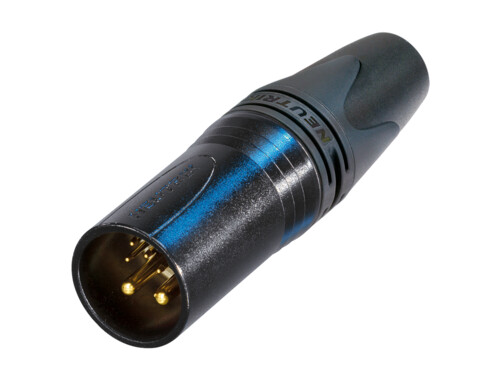
Not a standard multi-pin XLR, though. It's a bespoke 8+2pin configuration within a standard XLR shell, from Neutrik. It features 8 very thin pins for data and two fat ones for DC power. It's called the NC10MXX-14-b and was originally designed for cat5e Ethernet plus high-current (16A) POE applications -- specifically intended for Dante network system wiring etc, rather than analogue multichannel audio -- but adopted and adapted very successfully by Rode for the NT-SF1
https://www.neutrik.com/en/product/nc10mxx-14-b
Last edited by Hugh Robjohns on Mon Apr 22, 2019 11:07 am, edited 3 times in total.
-
- Hugh Robjohns
Moderator -
Posts: 43683 Joined: Fri Jul 25, 2003 12:00 am
Location: Worcestershire, UK
Contact:
Technical Editor, Sound On Sound...
(But generally posting my own personal views and not necessarily those of SOS, the company or the magazine!)
In my world, things get less strange when I read the manual...
(But generally posting my own personal views and not necessarily those of SOS, the company or the magazine!)
In my world, things get less strange when I read the manual...

Re: Using 4 core cable to run two microphones, church organs on location.
Back on the subject of microphones, Hugh mentioned the Soundfield for recording church organs, its a very interesting one-mic solution, I had a chance to buy one a couple of years ago but turned it down as I thought I would never really use it seeing as I have no interest in surround, I'd only use it in a stereo configuration and that seems a bit of a waste to me.
But if it's the preferred mic for organs it may worth looking into again, not sure?
But if it's the preferred mic for organs it may worth looking into again, not sure?
Last edited by Arpangel on Mon Apr 22, 2019 8:39 am, edited 1 time in total.
"I will not say: do not weep; for not all tears are an evil" Gandalf - J.R.R. Tolkien.
Re: Using 4 core cable to run two microphones, church organs on location.
Arpangel wrote:But if it's the preferred mic for organs it may worth looking into again, not sure?
It’s not preferred (well...it might be for some but not others), it’s just another option.
As if often the case, this is another ‘it depends’ style question where one case doesn’t always it all.
-

- Aural Reject
Frequent Poster -
Posts: 995 Joined: Fri May 02, 2003 12:00 am
Location: Lancashire born, living in Yorkshire :s
Contact:
Re: Using 4 core cable to run two microphones, church organs on location.
Arpangel wrote:Back on the subject of microphones,
...
But if it's the preferred mic for organs it may worth looking into again, not sure?
The last time I looked into ths (a few years ago) the most consitently recommended high-end and expensive microphone for organ recording was the DPA 4006 omni.
There is another thread on the forum that includes discussion of the more affordable mics you might be interested in. Note that some options are multi-pattern so give you some extra flexibility for other uses if you want it.
Re: Using 4 core cable to run two microphones, church organs on location.
wireman wrote:Arpangel wrote:Back on the subject of microphones,
...
But if it's the preferred mic for organs it may worth looking into again, not sure?
The last time I looked into ths (a few years ago) the most consitently recommended high-end and expensive microphone for organ recording was the DPA 4006 omni.
There is another thread on the forum that includes discussion of the more affordable mics you might be interested in. Note that some options are multi-pattern so give you some extra flexibility for other uses if you want it.
Thanks for that link, the problem with choosing the right mictophone for the circumstances you're in always relies on a big collection, I know the character of certain mic's, but it's impossible to make a judgement unless you own these things. I think we have to work with what we've got, and as time goes by, try and get some experience with the ones we don't have, borrowing, hiring etc.
I've just bought two Schoeps omnis and they are the only omnis I own, the DPA4006 are very nice and I'd like to get a couple at some point, but microphones are so expensive, and I can't justify the expense right now. The 4006 has a lovely bass, however, when I was recording with a friend we used the Schoeps on organs where the 4006 was too boomy, the Schoeps seemed to clean things up. But as people have said, each situation is different, and there is no preferred mic, but to experiment, thats the problem, I'd like to try a Soundfield, just to see what it's like.
"I will not say: do not weep; for not all tears are an evil" Gandalf - J.R.R. Tolkien.
Re: Using 4 core cable to run two microphones, church organs on location.
Tony, what the F are you doing out of bed at this time of day?
Add a 4" ribbon to the mix for a satisfying organ bass. That cheap Thomann thing will do the job!
https://www.thomann.de/gb/the_tbone_rb5 ... 71ee9bfe94 It comes in all shapes and sizes and prices up to £300, but they are all the same and come from the same factory.
DPA 4006 - nah! Tried 'em, sent 'em back!
Best church organ sound on a location recording - a pair of M149s.
Add a 4" ribbon to the mix for a satisfying organ bass. That cheap Thomann thing will do the job!
https://www.thomann.de/gb/the_tbone_rb5 ... 71ee9bfe94 It comes in all shapes and sizes and prices up to £300, but they are all the same and come from the same factory.
DPA 4006 - nah! Tried 'em, sent 'em back!
Best church organ sound on a location recording - a pair of M149s.
Last edited by The Red Bladder on Mon Apr 22, 2019 11:04 am, edited 1 time in total.
-
- The Red Bladder
Frequent Poster - Posts: 3904 Joined: Tue Jun 05, 2007 12:00 am Location: . . .
Re: Using 4 core cable to run two microphones, church organs on location.
I've come across specialist organ music labels using the SoundField for surround recordings, but in many cases the mic has been used mostly for it's abilities in altering the virtual capsule steering and polar patterns.
Being a coincident array, the stereo imaging is very precise but tends to lack 'spaciousness', so won't suit all church acoustics. It can be supplemented with spaced omnis though, if required...
H
Being a coincident array, the stereo imaging is very precise but tends to lack 'spaciousness', so won't suit all church acoustics. It can be supplemented with spaced omnis though, if required...
H
-
- Hugh Robjohns
Moderator -
Posts: 43683 Joined: Fri Jul 25, 2003 12:00 am
Location: Worcestershire, UK
Contact:
Technical Editor, Sound On Sound...
(But generally posting my own personal views and not necessarily those of SOS, the company or the magazine!)
In my world, things get less strange when I read the manual...
(But generally posting my own personal views and not necessarily those of SOS, the company or the magazine!)
In my world, things get less strange when I read the manual...