Hi, my vocalist recently purchased a Senneheiser e945 for a vocal mic as most forums and posts seem to tout it as a great mic for feedback rejection, however in practice it caused more feedback than any mic we'd ever used (58s, 57s etc - normal cardioid pattern mics).
My assumption is that because the e945 is a super-cardioid it's taking in a little sound from the rear whereas normal cardioids reject everything from the rear and because our rehearsal space has the guitars/vocalist facing the PA speaker like a normal practice room, the rear of the mic is facing the speakers so it's feeding back more due to this.
Is there any sense to this? Literally every post i've seen for "best mics for feedback rejection" all tout super-cardiod patterns as the answer but I dont see how that could possibly be right as allowing sound in through the rear of the mic is a big no-no for most practice room set ups (amps/vox facing drums, pa speakers behind drums facing out to amps/vox)
Thanks in advance
Super-cardioid pattern for live vocals
Super-cardioid pattern for live vocals
-
- Jesuslizardjr
Poster - Posts: 21 Joined: Fri Dec 08, 2023 4:05 pm
Re: Super-cardioid pattern for live vocals
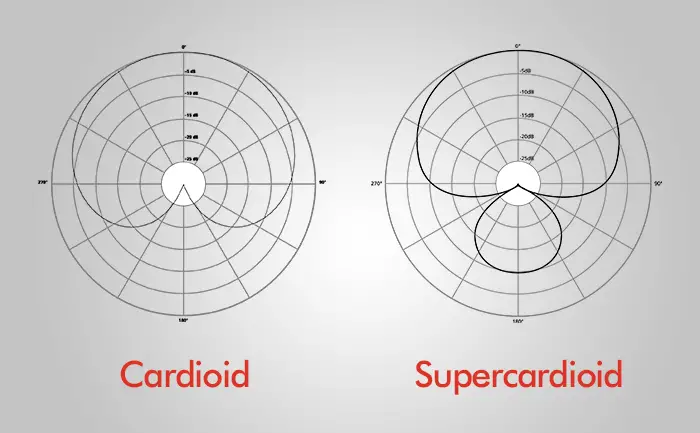
If you think of a typical stage set up, with monitors at the front edge of the stage and a singer's mic on a stand pointing at their mouth, then a supercardiod makes sense because the monitor will be sitting right in that null.
If your practice set up doesn't reflect that, then go back to a cardiod pattern if that was more effective.
There's not a really a 'best' without putting things in the actual context that they're being used. So if a cardiod is better for your use, than that's the thing to stick with.
If your practice set up doesn't reflect that, then go back to a cardiod pattern if that was more effective.
There's not a really a 'best' without putting things in the actual context that they're being used. So if a cardiod is better for your use, than that's the thing to stick with.
-

- Drew Stephenson
Apprentice Guru -
Posts: 29715 Joined: Sun Jul 05, 2015 12:00 am
Location: York
Contact:
(The forumuser formerly known as Blinddrew)
Ignore the post count, I have no idea what I'm doing...
https://drewstephenson.bandcamp.com/
Ignore the post count, I have no idea what I'm doing...
https://drewstephenson.bandcamp.com/
Re: Super-cardioid pattern for live vocals
This pic would suggest positioning your mic so that the speakers are at 120° (the singer is seeing it out of the corner of their eye) rather than 180° (facing the speaker direct).
This is also my experience.
This is also my experience.
-
- shufflebeat
Jedi Poster - Posts: 10110 Joined: Sun Dec 09, 2007 12:00 am Location: Manchester, UK
“…I can tell you I don't have money, but what I do have are a very particular set of skills. Skills I have acquired over a very long career” - (folk musician, Manchester).
Re: Super-cardioid pattern for live vocals
On a gig, though, you would have the singer behind the FOH speakers and would position the foldback speakers appropriately for best feedback rejection. Shure even supply a cardboard printed template showing the null zones for their Beta series mics (which are super-cardioid). The nulls in the polar pattern of a super-cardioid are deeper than the single rear null of a cardioid so capable of better rejection if used correctly. Your use in the rehearsal room with speakers directly behind the singers mic and on axis is the problem.
edit :- Drew and shuff got there first
edit :- Drew and shuff got there first
-

- Sam Spoons
Forum Aficionado - Posts: 22904 Joined: Thu Jan 23, 2003 12:00 am Location: Manchester UK
Still mourning the loss of my 'Jedi Poster" status 
People often mistake me for a grown-up because of my age.
People often mistake me for a grown-up because of my age.
Re: Super-cardioid pattern for live vocals
If you cant put the e945 in a position where the null is facing the PA speakers in the rehearsal space, then you may want to use a cardioid for rehearsals (e.g. an SM58) and the e945 for gigs.

Reliably fallible.
Re: Super-cardioid pattern for live vocals
Jesuslizardjr wrote: ↑Tue Feb 04, 2025 4:23 pm Hi, my vocalist recently purchased a Senneheiser e945 for a vocal mic as most forums and posts seem to tout it as a great mic for feedback rejection, however in practice it caused more feedback than any mic we'd ever used (58s, 57s etc - normal cardioid pattern mics).
Not surprised. The e945 is a great mic for feedback rejection, if used in the right circumstances.
You weren't using it in the right circumstances, and a standard cardioid is going to be a better choice in your rehearsal room.
Supercardioids have a much narrower pickup at the front which, on a normal stage, means it will pick up much less spill from backing and side fills etc.
It also has much deeper rejection nulls at the back than most cardioids, but they are around 120 degrees either side, rather than at 180 degrees. So it's critical to position the mic appropriately relative to unwanted sound sources, otherwise it will make things worse, not better.
For example, this means foldback wedges need to be moved out to the sides a little, rather than directly in front of the mic stand.
The downsides of a supercardioid stage mic are that:
1.) The mic has a rear 'tail' in the polar pattern. Not as strong as a fig 8 but definitely sensitive to sound sources behind the mic. On a stage that's not usually a problem as the only sources at 180 degrees are the (relatively distant) audience. In your rehearsal room scenario it would naturally tend to pick up a lot of your PA — hence increased feedback.
Turning the mic 60 degrees left or right to aim a null at the PA speakers might have helped reduce feedback, but you might also have picked up more spill from other sources in the room the are then directly behind the mic.
2.) The much narrower frontal pickup requires the singer to stay precisely on axis, and a very good mic technique is important. Relatively small moves off-axis will reduce the vocal level dramatically — much more than a cardioid. So if you're using compression on the vocal mic, or running with higher gain to even out any off-axis parts more feedback is likely.
I like the e945 for live sound work, but it requires skilful use and sympathetic engineering. The e935 is the cardioid equivalent which is still a very good mic.
-

- Hugh Robjohns
Moderator -
Posts: 43691 Joined: Fri Jul 25, 2003 12:00 am
Location: Worcestershire, UK
Contact:
Technical Editor, Sound On Sound...
(But generally posting my own personal views and not necessarily those of SOS, the company or the magazine!)
In my world, things get less strange when I read the manual...
(But generally posting my own personal views and not necessarily those of SOS, the company or the magazine!)
In my world, things get less strange when I read the manual...
Re: Super-cardioid pattern for live vocals
Thanks for the replies, I dont think we have the luxury to position so carefully in our space as it's not the biggest of rooms, the singer is currently about 30/40 degrees angled from the speakers but looking the spec sheet for the e945 it seems the rejection point is pretty precise and we dont wanna be getting measuring tapes out just practice, kinda makes a lot more sense now though. Thanks for the help.
-
- Jesuslizardjr
Poster - Posts: 21 Joined: Fri Dec 08, 2023 4:05 pm
Re: Super-cardioid pattern for live vocals
Hugh Robjohns wrote: ↑Tue Feb 04, 2025 6:25 pmJesuslizardjr wrote: ↑Tue Feb 04, 2025 4:23 pm Hi, my vocalist recently purchased a Senneheiser e945 for a vocal mic as most forums and posts seem to tout it as a great mic for feedback rejection, however in practice it caused more feedback than any mic we'd ever used (58s, 57s etc - normal cardioid pattern mics).
Not surprised. The e945 is a great mic for feedback rejection, if used in the right circumstances.
You weren't using it in the right circumstances, and a standard cardioid is going to be a better choice in your rehearsal room.
Supercardioids have a much narrower pickup at the front which, on a normal stage, means it will pick up much less spill from backing and side fills etc.
It also has much deeper rejection nulls at the back than most cardioids, but they are around 120 degrees either side, rather than at 180 degrees. So it's critical to position the mic appropriately relative to unwanted sound sources, otherwise it will make things worse, not better.
For example, this means foldback wedges need to be moved out to the sides a little, rather than directly in front of the mic stand.
The downsides of a supercardioid stage mic are that:
1.) The mic has a rear 'tail' in the polar pattern. Not as strong as a fig 8 but definitely sensitive to sound sources behind the mic. On a stage that's not usually a problem as the only sources at 180 degrees are the (relatively distant) audience. In your rehearsal room scenario it would naturally tend to pick up a lot of your PA — hence increased feedback.
Turning the mic 60 degrees left or right to aim a null at the PA speakers might have helped reduce feedback, but you might also have picked up more spill from other sources in the room the are then directly behind the mic.
2.) The much narrower frontal pickup requires the singer to stay precisely on axis, and a very good mic technique is important. Relatively small moves off-axis will reduce the vocal level dramatically — much more than a cardioid. So if you're using compression on the vocal mic, or running with higher gain to even out any off-axis parts more feedback is likely.
I like the e945 for live sound work, but it requires skilful use and sympathetic engineering. The e935 is the cardioid equivalent which is still a very good mic.
Does the vertical angle of the microphone effect much? We have thought post-session about pointing the rear towards the ground more?
Thanks
-
- Jesuslizardjr
Poster - Posts: 21 Joined: Fri Dec 08, 2023 4:05 pm
Re: Super-cardioid pattern for live vocals
Yes, the 120º max null is circular around the rear axis.
-
- Sam Spoons
Forum Aficionado - Posts: 22904 Joined: Thu Jan 23, 2003 12:00 am Location: Manchester UK
Still mourning the loss of my 'Jedi Poster" status
People often mistake me for a grown-up because of my age.
People often mistake me for a grown-up because of my age.
Re: Super-cardioid pattern for live vocals
If you draw an imaginary line at 180° (out the back of the mic) then imagine a cone at 60° from that line that looks like one of those things dogs wear to stop them licking their nether regions, that cone is the null (deaf spot).
As Sam and Hugh have suggested, place your speakers/monitors 60° from the back of the mic, anywhere on the rim of the cone and you have the best position.
In wedge monitor terms that will mean (ideally) a pair, offset to the left and right to and positioned to hit the edge of the same cone.
No need for measuring devices, just move your mic til it stops feeding back. If you have any hearing left it’ll be great.
This null also means that a super-cardioid mic is best positioned horizontal rather than how you would position a cardioid, at an angle with the null at 180° pointing to your wedge.
As Sam and Hugh have suggested, place your speakers/monitors 60° from the back of the mic, anywhere on the rim of the cone and you have the best position.
In wedge monitor terms that will mean (ideally) a pair, offset to the left and right to and positioned to hit the edge of the same cone.
No need for measuring devices, just move your mic til it stops feeding back. If you have any hearing left it’ll be great.
Jesuslizardjr wrote: ↑Tue Feb 04, 2025 9:36 pm Does the vertical angle of the microphone effect much? We have thought post-session about pointing the rear towards the ground more?
Thanks
This null also means that a super-cardioid mic is best positioned horizontal rather than how you would position a cardioid, at an angle with the null at 180° pointing to your wedge.
-
- shufflebeat
Jedi Poster - Posts: 10110 Joined: Sun Dec 09, 2007 12:00 am Location: Manchester, UK
“…I can tell you I don't have money, but what I do have are a very particular set of skills. Skills I have acquired over a very long career” - (folk musician, Manchester).
Re: Super-cardioid pattern for live vocals
Another suggestion, if you are struggling to contain feedback in the practice room can you not just play more quietly in there? There are multiple benefits to doing so aside from the absence of howlround on the the vocals, you can hear the arrangements better (and the mistakes), any harmonies are clearer and easier to pitch, and your hearing will thank you...
-
- Sam Spoons
Forum Aficionado - Posts: 22904 Joined: Thu Jan 23, 2003 12:00 am Location: Manchester UK
Still mourning the loss of my 'Jedi Poster" status
People often mistake me for a grown-up because of my age.
People often mistake me for a grown-up because of my age.
Re: Super-cardioid pattern for live vocals
This is always the right answer, despite all the young and inexperienced band members who would insist otherwise.
Re: Super-cardioid pattern for live vocals
But in an effort to make the drummer play quieter (so you can turn the other instruments down), you can only hit them so many times before you have to take them to A&E, and so bring the rehearsal to an end.
Reliably fallible.
Re: Super-cardioid pattern for live vocals
Ah, the old "punching in the rhythm part" conundrum... 
-
- Sam Spoons
Forum Aficionado - Posts: 22904 Joined: Thu Jan 23, 2003 12:00 am Location: Manchester UK
Still mourning the loss of my 'Jedi Poster" status
People often mistake me for a grown-up because of my age.
People often mistake me for a grown-up because of my age.
Re: Super-cardioid pattern for live vocals
These days we have drum screens to attenuate the drummer. In previous times we had remote sheds.
-
- shufflebeat
Jedi Poster - Posts: 10110 Joined: Sun Dec 09, 2007 12:00 am Location: Manchester, UK
“…I can tell you I don't have money, but what I do have are a very particular set of skills. Skills I have acquired over a very long career” - (folk musician, Manchester).
Re: Super-cardioid pattern for live vocals
To be fair to those young bands starting out, a lot of practice rooms are acoustically terrible; concrete walls, low ceilings, little to no acoustic treatment (and generally a ratty old PA with only half the channels working).
-
- Drew Stephenson
Apprentice Guru -
Posts: 29715 Joined: Sun Jul 05, 2015 12:00 am
Location: York
Contact:
(The forumuser formerly known as Blinddrew)
Ignore the post count, I have no idea what I'm doing...
https://drewstephenson.bandcamp.com/
Ignore the post count, I have no idea what I'm doing...
https://drewstephenson.bandcamp.com/
Re: Super-cardioid pattern for live vocals
We match the guitars to the level of the drummer, i mean we've been doing this 16 years.. we just have a new singer and her voice is fairly quiet so we're turning the PA up to compensate hence the feedback. We really dont have the care to be using screens to attenuate, it all sounds a bit too clapton for us, we're just diy musicians.
Thanks for the help, as Hugh pointed out it just seems to be the wrong microphone pattern for our circumstances, I think it was just mistakenly purchased as the reviews saying its one of the best for feedback rejection are referring to a stage environment where the foh is facing the audience the wedges are on the ground.
Thanks for the help, as Hugh pointed out it just seems to be the wrong microphone pattern for our circumstances, I think it was just mistakenly purchased as the reviews saying its one of the best for feedback rejection are referring to a stage environment where the foh is facing the audience the wedges are on the ground.
-
- Jesuslizardjr
Poster - Posts: 21 Joined: Fri Dec 08, 2023 4:05 pm
Re: Super-cardioid pattern for live vocals
You should be able to position the mic so that you don’t get feedback, at least less feedback that you’d get with a cardioid mic. If you can’t do that, then you’ll still struggle with it live. It’s worth persevering and getting it to work.
But if there isn’t any position that you can get it not to feedback, then you probably have the PA level too high for a cardioid mic to work either. There’s just too much gain in the system for the space (even if the female vocalist is now loud enough to hear).
Are larger/better rehearsal spaces available in your area?
But if there isn’t any position that you can get it not to feedback, then you probably have the PA level too high for a cardioid mic to work either. There’s just too much gain in the system for the space (even if the female vocalist is now loud enough to hear).
Are larger/better rehearsal spaces available in your area?
Reliably fallible.
Re: Super-cardioid pattern for live vocals
Jesuslizardjr wrote: ↑Wed Feb 05, 2025 8:16 pm ... We really dont have the care to be using screens to attenuate, it all sounds a bit too clapton for us, we're just diy musicians.
...
I plead ignorance ... what does that mean?
-

- alexis
Longtime Poster - Posts: 5284 Joined: Fri Jan 10, 2003 12:00 am Location: Hampton Roads, Virginia, USA
Home of the The SLUM Tapes (Shoulda Left Un-Mixed), mangled using Cubase Pro 14; W10 64 bit on Intel i5-4570 3.2GHz,16GB RAM;Steinberg UR28M interface; Juno DS88; UAD2 Solo/Native; Revoice Pro
Re: Super-cardioid pattern for live vocals
It’s worth remembering that along with the rear lobe and the offset mull’s a s/c mic often has a beam-like focus on higher frequencies coming from directly in front (0°). This means you’ve got to be really aware of what’s behind the singer and, specifically, what’s getting reflected back into the mic.
-
- shufflebeat
Jedi Poster - Posts: 10110 Joined: Sun Dec 09, 2007 12:00 am Location: Manchester, UK
“…I can tell you I don't have money, but what I do have are a very particular set of skills. Skills I have acquired over a very long career” - (folk musician, Manchester).
Re: Super-cardioid pattern for live vocals
alexis wrote: ↑Wed Feb 05, 2025 9:19 pmJesuslizardjr wrote: ↑Wed Feb 05, 2025 8:16 pm ... We really dont have the care to be using screens to attenuate, it all sounds a bit too clapton for us, we're just diy musicians.
...
I plead ignorance ... what does that mean?
I’m taking that to mean safe, high-budget and middle-aged.
-
- shufflebeat
Jedi Poster - Posts: 10110 Joined: Sun Dec 09, 2007 12:00 am Location: Manchester, UK
“…I can tell you I don't have money, but what I do have are a very particular set of skills. Skills I have acquired over a very long career” - (folk musician, Manchester).
Re: Super-cardioid pattern for live vocals
Too much a professional big-stage stage setup.
Either that or driving down to the paper shop for the Sunday papers in your Ferrari whilst still wearing slippers.
Either that or driving down to the paper shop for the Sunday papers in your Ferrari whilst still wearing slippers.
Reliably fallible.