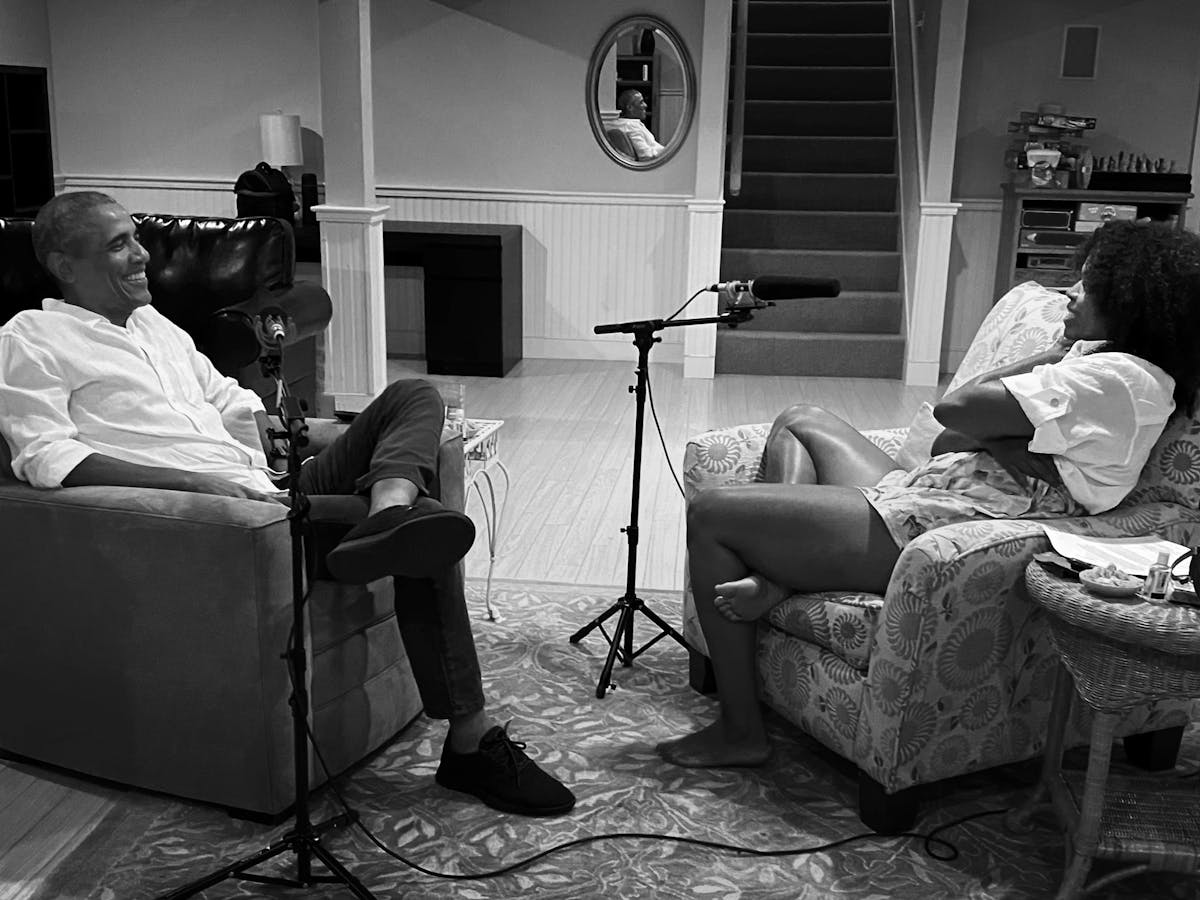
TrianaSound wrote:My question is, can I record both the interviewer and the interviewee using a cardioid (or super-cardioid) condenser microphone placed on floor stands positioned level with seated subjects' mouths, approximately 18" away and slightly off axis so as to be out of their line of sight (see attached photo)?
I'd suggest hyper-cardioid or super-cardioid mics -- with one facing each talker -- rather than standard cardioid (or fig-8) as their polar patterns would give better separation and less room sound, and thus better overall sound quality. The angle of the nulls also make placement and positioning easier to maximise isolation of each talker on their respective mics.
But yes, that arrangement would work well -- provided the room itself is quiet and has a reasonable acoustic.
Here's an image from a typical BBC 'soft chair' interview with a set up broadly similar to the one you describe:

This is using old AKG C450-series mics with mic capsules on stalks to minimise their visual intrusion for to the TV cameras, and there are mics on both sides partly to cope with the talkers turning to look at the audience as well as each other, and partly to serve as main/backup pairs as this was a live broadcast. Obviously you'd only need one mic on each talker.
Most domestic living rooms would be fine as a recording location, but beware traffic noise through open windows, ticking clocks, and other background noises that we tend to ignore in normal life but which microphones magically emphasise!
What specific microphones would you recommend for such a set-up?
What's the budget, and what are you recording them onto? Personally, I record interviews like this with Neumann KM185s onto a Nagra VI... but I doubt you'll want to go quite that high-end...

I anticipate the interviewees may shift around in chair during lengthy interviews which is why I thought a cardioid pick-up pattern might be better than shotgun...maybe?
Shotguns don't really work very well indoors -- the interference tube doesn't work correctly when there are strong side reflections and so you're left with the underlying hyper-cardioid capsule polar pattern anyway. In which case, standard hyper-cardioids look better, sound a lot nicer, and are less expensive!